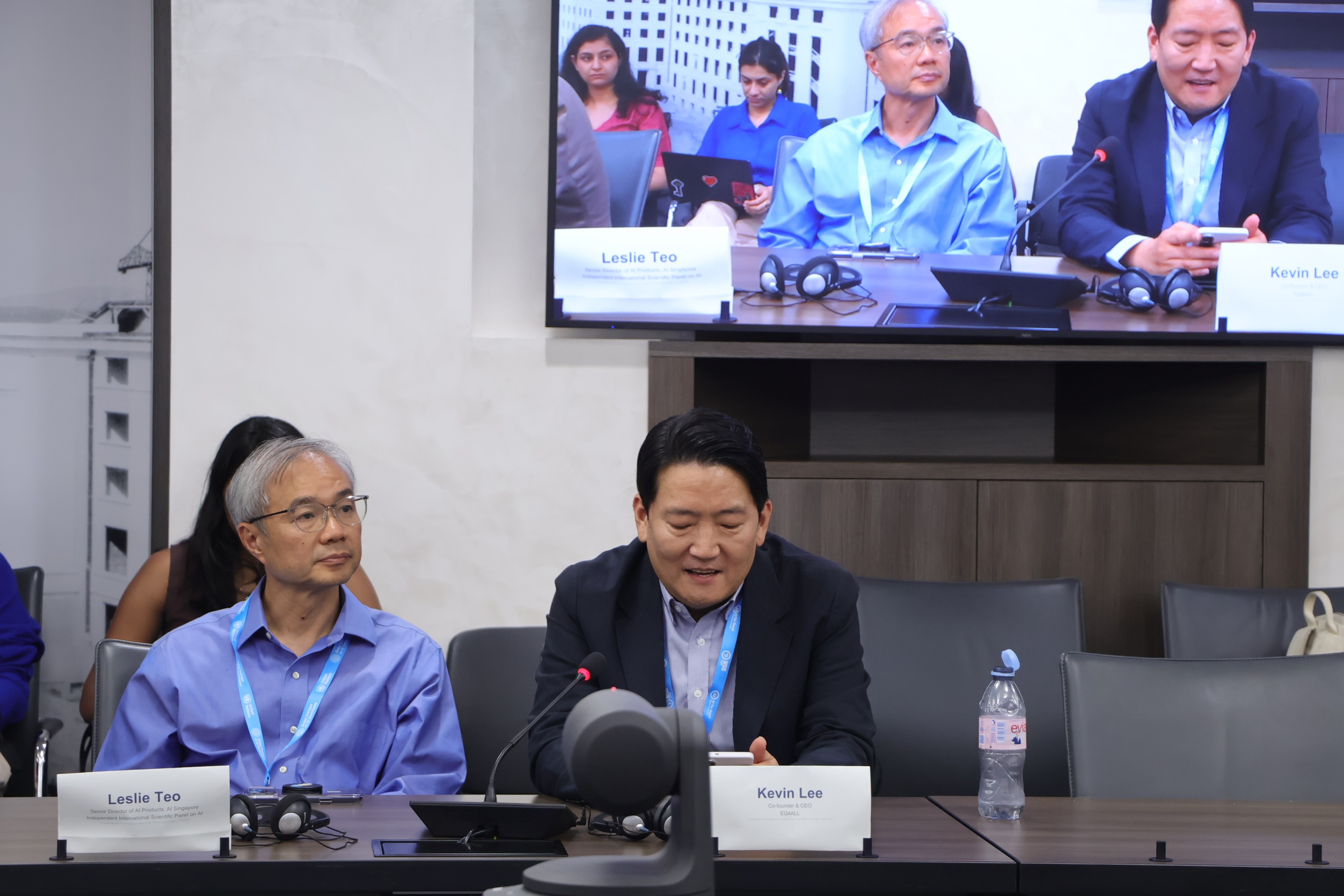
EQ4ALL CEO Kevin Lee taking part as a speaker in the UN OHCHR B-Tech session (Source: OHCHR)
On July 8 in Geneva, Switzerland, EQ4ALL CEO Kevin Lee took part as a speaker in a session of the UN Office of the High Commissioner for Human Rights (OHCHR) B-Tech Project. The session was titled "AI Governance and the Start-up Ecosystem in Asia." Held in connection with the AI for Good Summit taking place in Geneva that same week, it gathered participants from around the world around a single question: how do we put AI to work for people?
Speaking from the perspective of an Asian social venture and small-and-medium enterprise (SME), Kevin brought EQ4ALL's view to the stage: responsible AI and human rights are not an obligation to comply with, but a strategy a company chooses. Performance and innovation matter, but human rights, accessibility, and inclusion should be the starting point of development — reflected from the very beginning across product design, data building, and service operations.
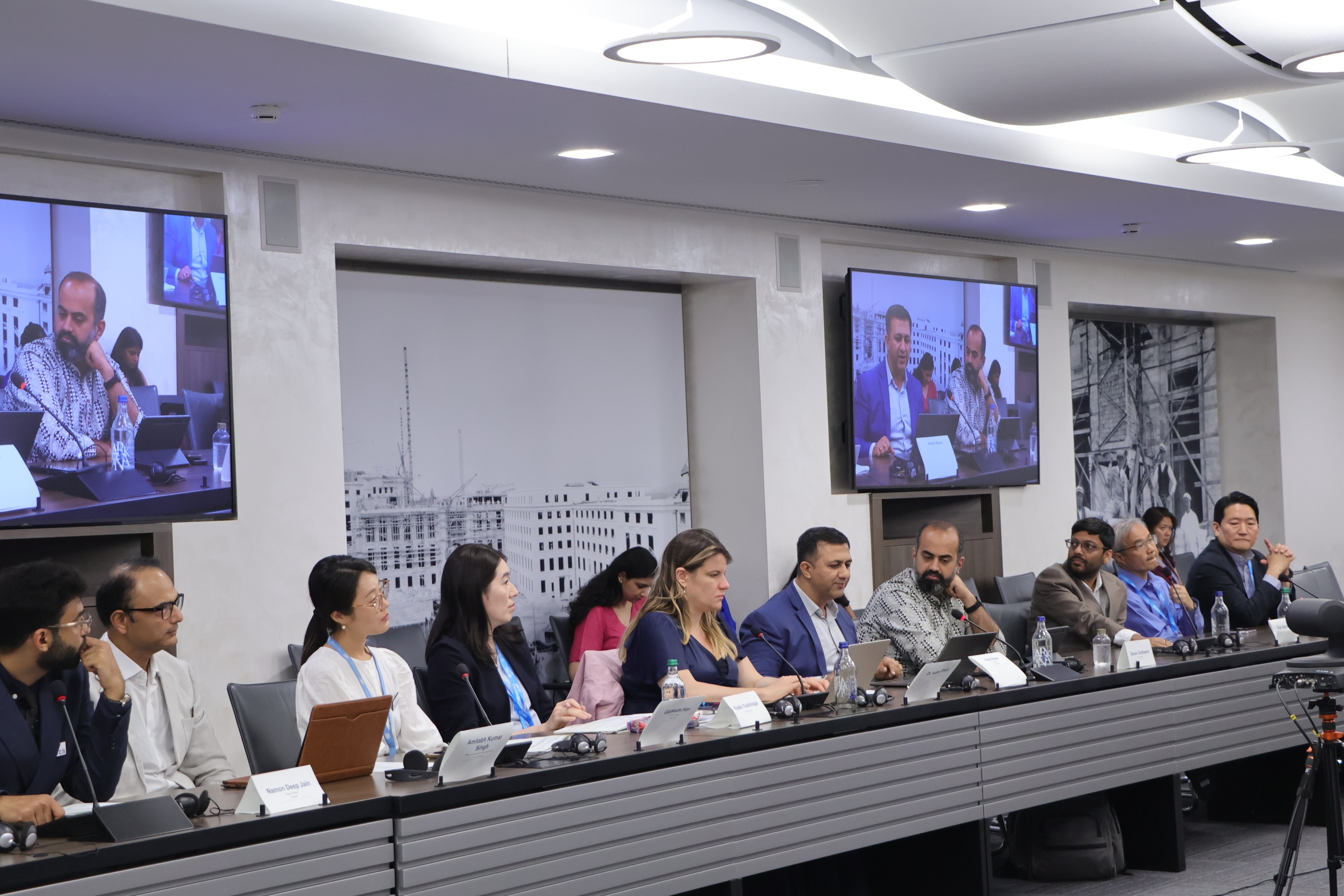
Participants from many countries at the OHCHR B-Tech session (Source: OHCHR)
He introduced EQ4ALL's SignTong and Ongl as cases where human-rights principles take shape in real technology. He also shared other social-innovation examples from Korea: Nanum Vitamin, which uses AI to identify welfare blind spots and connect people to support; AIWORKX, which uses AI to support employment for vulnerable groups; and Sixty Hertz, which uses AI to operate renewable energy and cut carbon emissions — showing on the international stage how Korean social ventures are helping solve social problems with AI.
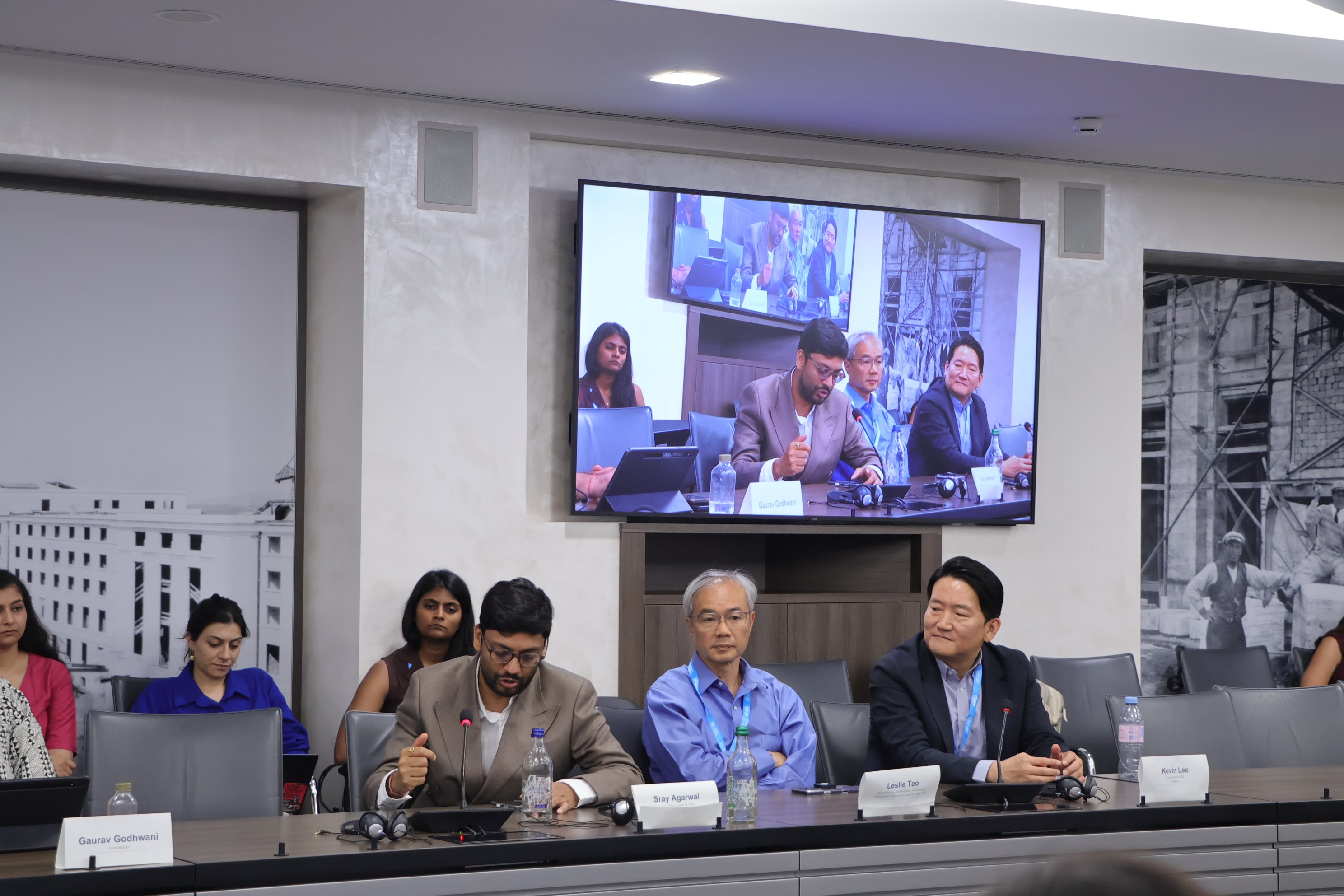
Discussion underway at the session on responsible AI and human rights (Source: OHCHR)
The discussion turned naturally to collaboration and ecosystems. While acknowledging that collaboration between Big Tech and startups is essential in terms of computing resources and AI models, Kevin proposed that for responsible AI to take hold, it must be accompanied by an ecosystem that supports transparency, data governance, accountability, and user participation. He emphasized that governments, international organizations, and large corporations should work with socially driven AI startups to build policies and support systems that advance human-centered AI innovation.
If the AI for Good Summit that same week showed "what AI can do," this OHCHR B-Tech session was a space to consider together "how to use that AI for people." EQ4ALL will continue to add its on-the-ground voice to the conversation on building a fairer society of opportunity through technology and data.






EQ4ALL CEO Kevin Lee taking part as a speaker in the UN OHCHR B-Tech session (Source: OHCHR)
On July 8 in Geneva, Switzerland, EQ4ALL CEO Kevin Lee took part as a speaker in a session of the UN Office of the High Commissioner for Human Rights (OHCHR) B-Tech Project. The session was titled "AI Governance and the Start-up Ecosystem in Asia." Held in connection with the AI for Good Summit taking place in Geneva that same week, it gathered participants from around the world around a single question: how do we put AI to work for people?
Speaking from the perspective of an Asian social venture and small-and-medium enterprise (SME), Kevin brought EQ4ALL's view to the stage: responsible AI and human rights are not an obligation to comply with, but a strategy a company chooses. Performance and innovation matter, but human rights, accessibility, and inclusion should be the starting point of development — reflected from the very beginning across product design, data building, and service operations.
Participants from many countries at the OHCHR B-Tech session (Source: OHCHR)
He introduced EQ4ALL's SignTong and Ongl as cases where human-rights principles take shape in real technology. He also shared other social-innovation examples from Korea: Nanum Vitamin, which uses AI to identify welfare blind spots and connect people to support; AIWORKX, which uses AI to support employment for vulnerable groups; and Sixty Hertz, which uses AI to operate renewable energy and cut carbon emissions — showing on the international stage how Korean social ventures are helping solve social problems with AI.
Discussion underway at the session on responsible AI and human rights (Source: OHCHR)
The discussion turned naturally to collaboration and ecosystems. While acknowledging that collaboration between Big Tech and startups is essential in terms of computing resources and AI models, Kevin proposed that for responsible AI to take hold, it must be accompanied by an ecosystem that supports transparency, data governance, accountability, and user participation. He emphasized that governments, international organizations, and large corporations should work with socially driven AI startups to build policies and support systems that advance human-centered AI innovation.
If the AI for Good Summit that same week showed "what AI can do," this OHCHR B-Tech session was a space to consider together "how to use that AI for people." EQ4ALL will continue to add its on-the-ground voice to the conversation on building a fairer society of opportunity through technology and data.