Department Store Services Should Be Accessible to Everyone
[ Why Is This Needed? ]
Department stores and large retail stores are increasingly adopting kiosks to provide a wide range of customer services, including gift certificate information, membership services, card consultations, customer support registration, and queue management.
However, conventional kiosks often lack sufficient accessibility features, such as sign language guidance for people with hearing impairments and accessible support functions for people with visual impairments. As a result, they have not always provided an inclusive experience for all customers.
The barrier-free kiosks installed at SHINSEGAE Department Store demonstrate how accessibility can be integrated into retail environments, enabling all customers to independently access and use essential services.
[ How Is It Used? ]
Barrier-Free Kiosk Deployment at SHINSEGAE Department Store
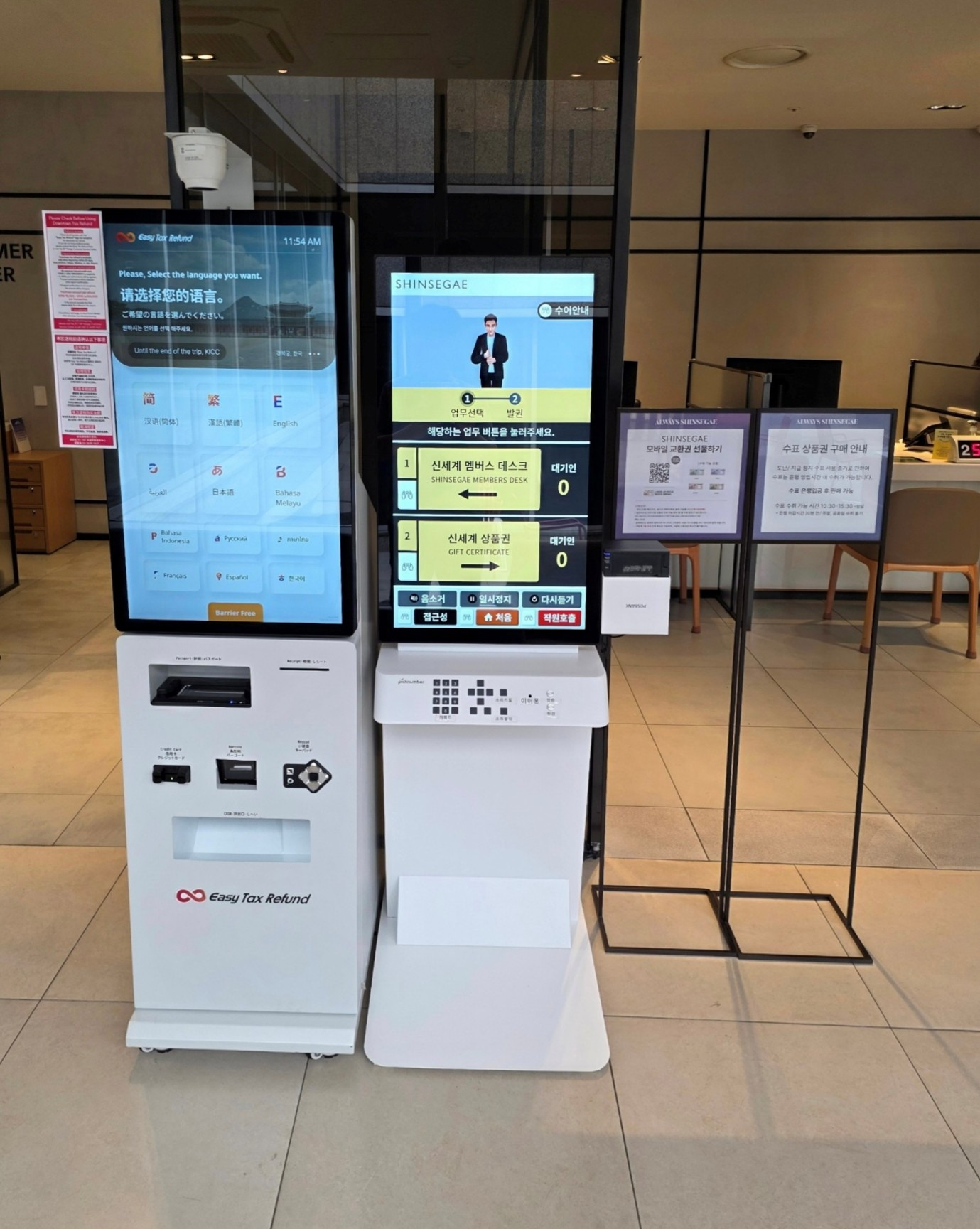
▲ Barrier-free kiosk installed in a customer service area at SHINSEGAE Department Store
SHINSEGAE Department Store's barrier-free kiosks incorporate EQ4ALL's SignTong technology, providing sign language guidance services for customers with hearing impairments.
Customers can use the kiosk to register for queues and check waiting numbers for services such as the SHINSEGAE Members Desk and Gift Certificate Center. They can also access information related to gift certificates, membership services, and card services. Throughout the process, a sign language avatar provides clear visual guidance, helping users better understand procedures and service information.
In addition, accessibility features such as audio volume control are provided to support customers with diverse accessibility needs, including those with visual impairments.
→ By reducing reliance on customer service staff, the solution helps create a retail environment where everyone can independently access services.
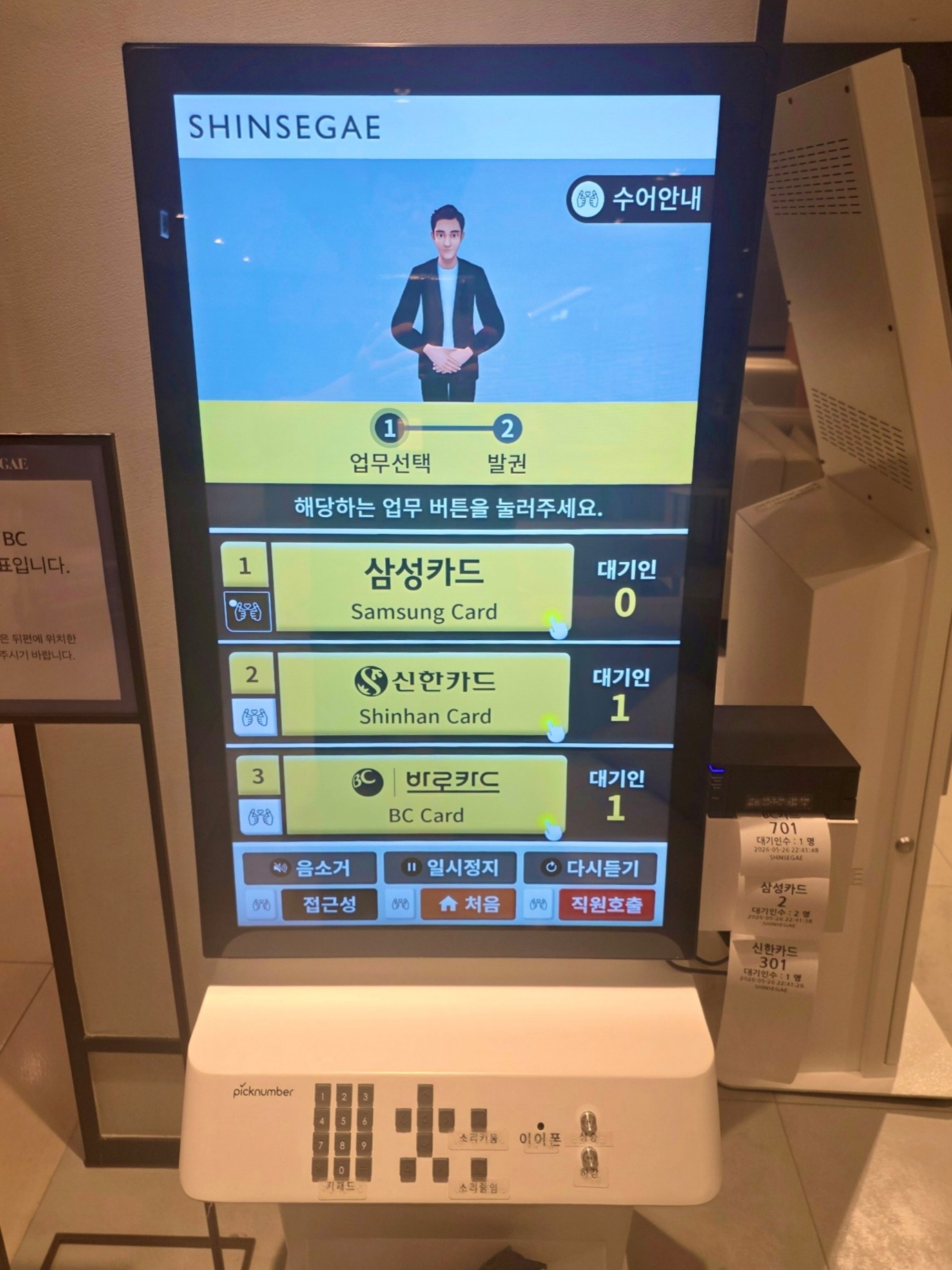
▲ Barrier-free kiosk currently in operation at SHINSEGAE Department Store
Designed with real customer usage scenarios in mind, the kiosk combines sign language guidance, audio guidance volume controls, an intuitive user interface, and queue registration and waiting number management functions for customer service counters such as the Members Desk and Gift Certificate Center.
In particular, SignTong-based sign language guidance helps customers with hearing impairments easily understand service procedures and queue information. This demonstrates how accessibility solutions can be effectively applied in retail and commercial environments.
→ This is an example of barrier-free services expanding beyond public-sector applications into retail and customer service environments.
[ What Changes? ]
- Improved Accessibility for Customer Services
Customers with hearing or visual impairments can more easily access gift certificate services, membership services, customer service counters, and queue management functions. - Expansion of Barrier-Free Services in Retail
Accessibility technologies that were traditionally focused on public institutions are now being extended into retail and commercial facilities. - Enhanced Operational Efficiency
Queue registration, waiting number management, and service guidance can be handled more efficiently, reducing repetitive explanations and improving customer service operations. - More Inclusive Brand Experience
Accessible services contribute to a more inclusive customer experience, strengthening customer trust and reinforcing the brand's commitment to diversity and inclusion.






Department Store Services Should Be Accessible to Everyone
[ Why Is This Needed? ]
Department stores and large retail stores are increasingly adopting kiosks to provide a wide range of customer services, including gift certificate information, membership services, card consultations, customer support registration, and queue management.
However, conventional kiosks often lack sufficient accessibility features, such as sign language guidance for people with hearing impairments and accessible support functions for people with visual impairments. As a result, they have not always provided an inclusive experience for all customers.
The barrier-free kiosks installed at SHINSEGAE Department Store demonstrate how accessibility can be integrated into retail environments, enabling all customers to independently access and use essential services.
[ How Is It Used? ]
Barrier-Free Kiosk Deployment at SHINSEGAE Department Store
▲ Barrier-free kiosk installed in a customer service area at SHINSEGAE Department Store
SHINSEGAE Department Store's barrier-free kiosks incorporate EQ4ALL's SignTong technology, providing sign language guidance services for customers with hearing impairments.
Customers can use the kiosk to register for queues and check waiting numbers for services such as the SHINSEGAE Members Desk and Gift Certificate Center. They can also access information related to gift certificates, membership services, and card services. Throughout the process, a sign language avatar provides clear visual guidance, helping users better understand procedures and service information.
In addition, accessibility features such as audio volume control are provided to support customers with diverse accessibility needs, including those with visual impairments.
→ By reducing reliance on customer service staff, the solution helps create a retail environment where everyone can independently access services.
▲ Barrier-free kiosk currently in operation at SHINSEGAE Department Store
Designed with real customer usage scenarios in mind, the kiosk combines sign language guidance, audio guidance volume controls, an intuitive user interface, and queue registration and waiting number management functions for customer service counters such as the Members Desk and Gift Certificate Center.
In particular, SignTong-based sign language guidance helps customers with hearing impairments easily understand service procedures and queue information. This demonstrates how accessibility solutions can be effectively applied in retail and commercial environments.
→ This is an example of barrier-free services expanding beyond public-sector applications into retail and customer service environments.
[ What Changes? ]
Customers with hearing or visual impairments can more easily access gift certificate services, membership services, customer service counters, and queue management functions.
Accessibility technologies that were traditionally focused on public institutions are now being extended into retail and commercial facilities.
Queue registration, waiting number management, and service guidance can be handled more efficiently, reducing repetitive explanations and improving customer service operations.
Accessible services contribute to a more inclusive customer experience, strengthening customer trust and reinforcing the brand's commitment to diversity and inclusion.